
WELCOME BONUS 300%
UP TO €2000 + 100
FREE SPINS
UP TO €2000 + 100
FREE SPINS
Home → Games
Casino games at Vegastars Casino
Player pays 1:1 without any commission
The Baccarat Player bet offers a strict 1:1 payout ratio on winning wagers, creating a transparent financial outcome for high rollers who prefer predictable returns. This specific wager maintains an RTP of 98.76% and carries a house edge of just 1.24%, making it statistically superior to many other table games available in the market. The absence of any commission fees ensures that every euro wagered contributes directly to the potential profit without hidden deductions reducing the final return.
In contrast, the Baccarat Banker bet involves a 5% commission on all wins, which reduces the effective payout to 0.95:1 despite the lower house edge of 1.06%. This structural difference means that while the Banker option is technically more profitable over the long term due to its higher frequency of wins, the Player bet remains commission-free. High rollers often calculate the variance carefully, knowing that the standard deviation for the Player bet stands at 0.95 compared to 0.93 for the Banker.
Comparing these two options highlights how the house edge influences long-term bankroll management for significant stakes. The Player bet’s 1.24% edge is slightly higher than the Banker’s 1.06%, but the lack of commission simplifies tracking total profits during intense sessions. This clarity appeals to experienced players who value straightforward mathematics over complex fee structures when placing substantial bets on each hand dealt.
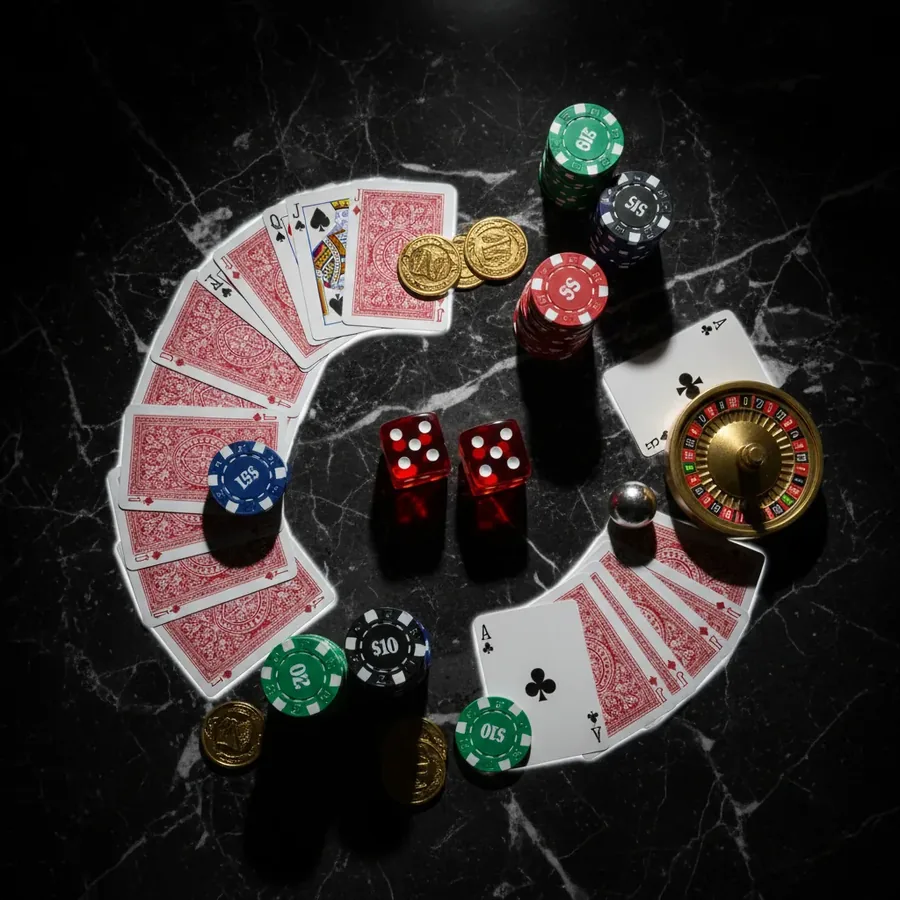
How many sectors does the Game Show wheel have?
European Roulette features a wheel with exactly 37 numbered sectors, ranging from zero to thirty-six, which establishes a constant house edge of 2.70% across all possible wagers. This single-zero configuration provides a significantly better return profile than American variants, as the probability distribution favors the player more effectively than wheels with additional green pockets. The payout structure mirrors this fairness, offering straight bets at 35:1 and split bets at 17:1 regardless of where the chip is placed on the layout.
American Roulette expands the wheel to include both zero and double zero, resulting in 38 total sectors and a much steeper house edge of 5.26% for most bets. This additional pocket fundamentally alters the odds, making nearly every wager less favorable compared to its European counterpart. Only the Five Number Bet deviates further by imposing a massive 7.89% house edge, covering five sectors including both zeros for a 6:1 payout that represents a statistical trap for inexperienced gamblers.
French Roulette modifies the European 37-sector wheel by introducing La Partage rules for even-money bets, which lowers the house edge to 1.35% on those specific wagers. When the ball lands on zero, half of the stake on Red/Black or Odd/Even is returned, effectively halving the casino's advantage on these popular high-volume bets. Inner bets like Straight or Split do not benefit from this rule and retain the standard 2.70% edge inherent to the 37-sector design.
Sic Bo utilizes three dice rather than a physical wheel, yet its betting structure mimics sector-based probability distributions across various combinations. The game offers Special Bets with house edges ranging from 7.87% for Single Number bets up to 18.52% for Specific Doubles, creating a wide variance in expected returns. Players must navigate these steep odds carefully, as the Small/Big bets offer a more manageable 2.78% edge under Atlantic City rules, providing a safer entry point for high-stakes action.
American Roulette: 5.26 Percent Due to Double Zero
The American Roulette wheel contains 38 sectors, including both a single zero and a double zero, which directly creates the standard 5.26% house edge for most outside and inside bets. This elevated disadvantage stems from the increased number of losing outcomes relative to the fixed payout ratios offered by the casino for each wager type. Players engaging in high-volume sessions must account for this significant mathematical barrier, as it erodes bankrolls faster than European or French variants.
The Five Number Bet, covering zero, double zero, one, two, and three, imposes an exceptionally harsh house edge of 7.89%, making it the worst wager on the entire wheel. This specific bet pays 6:1 but covers only five of the 38 available sectors, resulting in an RTP of merely 92.11% that drastically underperforms other options. High rollers typically avoid this trap, recognizing that the extra zero compounds the disadvantage beyond the standard American baseline of 5.26%.
Contrasting this with European Roulette reveals why seasoned players prefer tables with fewer green pockets, as the 37-sector wheel limits the house edge to 2.70% across all wagers. The American variant’s additional double zero doubles the casino’s advantage on most bets, turning what might be a manageable loss rate into a rapid depletion of funds. Understanding this structural difference is crucial for managing large stakes, as the mathematical expectation shifts dramatically based on the wheel design alone.
Plein Pays 35:1, Cheval Pays 17:1
Straight bets, known as Plein in French roulette terminology, pay out at a strict 35:1 ratio, reflecting the low probability of hitting a single number on a 37-sector wheel. This payout structure applies consistently across European and French variants, where the house edge remains fixed at 2.70% regardless of the specific number chosen. High rollers placing substantial chips on individual numbers accept this high variance, knowing that a single win recovers multiple previous losses if the sequence aligns favorably.
Split bets, or Cheval wagers, cover two adjacent numbers and pay 17:1, effectively halving the risk compared to a full street while maintaining a proportional return. This option allows players to spread their exposure across multiple outcomes without increasing the nominal stake, making it a strategic choice for managing volatility during extended play. The 2.70% house edge persists here as well, ensuring that the mathematical expectation remains consistent with other inside bets on the same wheel.
Street bets covering three consecutive numbers pay 11:1, while corner bets spanning four numbers offer 8:1, both adhering to the standard 2.70% house edge in European formats. These wider coverage bets reduce the frequency of losses compared to straight splits, appealing to players who prefer steadier bankroll progression over dramatic highs. However, the payout ratios never compensate for the inherent house advantage, meaning long-term profitability relies entirely on disciplined stake management and session limits.
Martingale Fails After 8 Rounds at Table Limit
The Martingale strategy requires doubling the stake after every loss to recover previous deficits, but table limits inevitably truncate this progression before the desired win is achieved. For high rollers starting with a substantial base bet, doubling eight times results in a stake multiplier of 256, quickly approaching or exceeding maximum allowable wagers at many tables. This mathematical reality renders the system unsustainable, as a single losing streak can wipe out the entire bankroll required to sustain the next necessary increment.
Craps offers a superior alternative through Free Odds bets, which carry a true 0.00% house edge and pay according to actual probabilities rather than casino-imposed margins. When combined with a Pass Line bet, the overall house edge drops to 0.37% using a 3-4-5x odds model, providing far better value than any roulette progression system. This unique feature allows skilled players to minimize the casino's advantage significantly, unlike roulette strategies that cannot overcome the fixed house edge on the main wager.
Blackjack presents another viable path for advantage play, with liberal Vegas Strip rules achieving a mere 0.28% house edge when players follow optimal basic strategy perfectly. This near-even playing field contrasts sharply with roulette systems, as card counting and proper decision-making can occasionally shift the expectation slightly in the player’s favor. High rollers utilizing these methods focus on minimizing variance through precise execution, rather than relying on flawed betting progressions that ignore table constraints.
Game categories at a glance
| Category | Examples | Stakes From | Highlight |
|---|---|---|---|
| Slots | Big Bad Wolf Megaways, Mental, Legend of Cleopatra Megaways | 0,10 EUR | thousands of titles |
| Table games | Roulette, Blackjack, Baccarat | 0,50 EUR | classic rules |
| Live casino | Casino Hold'em, PowerUP Roulette | 0,20 EUR | real dealers |
| Jackpot games | Mega Moolah, Divine Fortune, Age of the Gods | 0,20 EUR | progressive pools |
| Instant games | Aviator, Plinko, Mines | 0,10 EUR | fast rounds |
| Video poker | Jacks or Better, Deuces Wild | 0,25 EUR | strategy based |
How Much Does One Mistake Cost in 100 Hands?
Blackjack Liberal Vegas Strip delivers an RTP of 99.72% against a house edge of 0.28%, making it the most mathematically favorable table game available to high rollers. This optimal edge relies on specific liberal rules including S17, DAS, and resplitting aces, which collectively minimize the casino's mathematical advantage. A single deviation from basic strategy or playing a 6:5 payout variant increases the house edge to 1.85%, costing players approximately $15.34 more per hundred hands compared to the 3:2 version.
The cost of error escalates significantly when comparing the standard 3:2 payout to inferior 6:5 structures found in some venues. A 6:5 Blackjack pays only $12 instead of $15 on a $10 bet, adding exactly 1.39 percentage points to the house edge. This rule change creates a much steeper climb for players attempting to recover losses over a session of one hundred hands. The mathematical penalty outweighs any minor variations in deck count or surrender options.
Baccarat Banker offers a competitive 1.06% house edge with an effective payout of 0.95:1 after the mandatory 5% commission. This commission structure compensates for the banker's statistical advantage during the third card draw phase. Players betting on the player side face a higher 1.24% edge, while avoiding the bank commission entirely. The choice between these two primary bets determines the baseline cost of play before any strategic errors occur.
Soft 17: the Ace counts 11 or 1
A Soft 17 hand consists of an Ace valued at 11 plus a six, allowing the dealer to hit without busting immediately if the next card is small. The rule requiring dealers to Hit Soft 17 (H17) negatively impacts player returns by increasing the house edge by 0.22 percentage points. In contrast, tables where dealers stand on all 17s offer better long-term value for those employing perfect basic strategy. This single rule variation shifts the theoretical return rate slightly downward across all betting scenarios.
Resplitting Aces (RSA) provides a slight counterbalance to unfavorable dealer rules by improving player returns by 0.08 percentage points. Allowing players to split aces again after drawing a non-ace card increases the frequency of strong starting hands. This rule is particularly valuable in games using multiple decks, as it mitigates some of the inherent disadvantage of the dealer hitting soft seventeen. Combining RSA with other liberal rules can keep the overall house edge below one percent.
Double After Split (DAS) further enhances player profitability by reducing the house edge by approximately 0.14 percentage points. This rule permits doubling down on hands created from split pairs, offering additional opportunities to capitalize on favorable dealer upcards. Without DAS, players must stick to their initial split hands, limiting their ability to maximize wins on strong positions. The combination of H17 penalties and DAS benefits creates a complex matrix of expected values for every hand dealt.
Before Double Down: read the open dealer card
Roulette European wheels feature a single zero across 37 sectors, establishing a constant house edge of 2.70% on all exterior and interior bets. This uniformity means that reading the dealer card or previous outcomes provides no predictive power for future spins. High rollers relying on statistical analysis must accept that each spin is an independent event with fixed probabilities. The payout structure remains identical regardless of the bet type, from straight-ups paying 35:1 to red/black paying 1:1.
French Roulette introduces the La Partage rule, which refunds half of even-money bets when the ball lands on zero. This mechanism reduces the house edge on red, black, odd, and even wagers from 2.70% down to 1.35%. However, this benefit applies exclusively to outside bets, leaving inside wagers like splits and streets at the standard 2.70% edge. Strategic players should prioritize these modified bets to minimize variance while maintaining exposure to potential payouts.
American Roulette contains both a zero and a double zero, creating 38 sectors and a base house edge of 5.26% on most wagers. The Five Number Bet covering 0, 00, 1, 2, and 3 carries a dangerous 7.89% house edge, making it the worst option on the table. This specific wager lacks any equivalent in European or French variants due to its inflated mathematical disadvantage. Avoiding this trap is essential for preserving bankroll integrity during extended play sessions.
Game Shows: sectors, multipliers, and bet ranges
Craps Pass Line bets carry a house edge of 1.41%, but taking free odds behind them eliminates the casino advantage entirely on the odds portion. The combined edge drops to 0.37% when utilizing a 3-4-5x odds model alongside the initial pass line wager. This unique feature allows high rollers to reduce their average cost per roll to just 0.111% over time. Free odds pay at true mathematical quotients, such as 2:1 for points four or ten.
Sic Bo Small and Big bets cover sums of four to ten and eleven to seventeen respectively, offering a house edge of 2.78%. These wagues lose automatically on any triple outcome, which significantly impacts the long-term return compared to other dice games. The payout remains a simple 1:1, mirroring the risk profile of roulette outside bets. Players seeking lower volatility should stick to these primary propositions rather than chasing higher-paying special bets.
Special Sic Bo wagers like Specific Triples offer massive payouts of 180:1 but carry a prohibitive 16.20% house edge. Single number bets provide the best value among specials at 7.87% edge, yet still fall far short of the efficiency offered by Craps odds. High rollers typically avoid these high-variance side bets unless specifically targeting jackpot conditions. The mathematical expectation heavily favors the conservative approach of sticking to main market lines.
Three Roulette Variants, Three House Edges Compared
Casino Hold'em Ante + Call requires players to post an ante followed by a call decision after seeing the flop. The house edge stands at 2.16% on the ante, though the risk element across the full cycle is lower at 0.82%. Payouts scale significantly for strong hands, with Royal Flushes paying 100:1 and Straights returning 1:1. Dealers must hold at least a pair of fours to qualify, pushing pushes when they fail to meet this threshold.
Video Poker Deuces Wild Not So Ugly Ducks presents an RTP of 99.73% against a 0.27% house edge, rivaling top-tier blackjack tables. Natural Royals pay 800 coins while Four Deuces yield 200, creating distinct volatility profiles compared to standard variants. This machine represents one of the most generous electronic gambling options available to skilled players. Mastering the correct hierarchy of hands is crucial to achieving the stated theoretical return.
Welcome bonuses often restrict table game contributions, allocating only 10% of wagers toward turnover requirements compared to 100% for slots. This limitation forces high rollers to either accept slower bonus clearance or focus exclusively on high-RTP games like Baccarat Banker. The 300% match up to €2,000 requires substantial volume to unlock fully under these restrictive terms. Understanding these contribution ratios is vital for calculating the true cost of acquiring promotional funds.
Baccarat commission: 5 percent on each Banker win
The Baccarat Banker bet carries a 5 percent commission on all winning hands, which reduces the effective payout to 0.95:1. This fee offsets the statistical advantage the banker holds during the third-card draw phase in an eight-deck shoe. Without this deduction, the house edge would be significantly higher than the current 1.06 percent.
This adjusted rate yields an RTP of 98.94%, making it the most favorable wager available at the table compared to other options. The Player bet offers a lower return with a 1.24% house edge and a standard deviation of 0.95, lacking any commission structure. Consequently, high rollers seeking maximum value consistently prioritize the Banker outcome despite the fee.
The 5 percent charge applies strictly to gross wins rather than the total wagered amount, preserving capital efficiency for large stakes. A $1,000 winning bet returns $995 after the commission is deducted from the profit portion. Players must account for this reduction when calculating their net bankroll progression over extended sessions.
37 vs. 38 Sectors: What the Double Zero Costs
American Roulette features a wheel with 38 sectors, including both single zero and double zero pockets, creating a distinct mathematical disadvantage for players. The Five Number Bet covers five specific sectors but suffers from a steep 7.89% house edge and an RTP of only 92.11%. This trap exists exclusively on the American layout and has no equivalent on European wheels.
In contrast, French Roulette utilizes a 37-sector wheel where La Partage rules apply to even-money bets, lowering the house edge to just 1.35%. However, inner wagers like Straights or Splits do not benefit from this protection and retain the standard 2.70% edge found in European games. The difference highlights how rule variations drastically alter long-term expectations.
High rollers often avoid the American variant due to its inflated margins, preferring tables that offer superior odds through reduced sector counts. The Straight bet pays 35:1 regardless of the wheel type, yet the probability of winning remains lower on the 38-pocket wheel. This structural disparity makes the European version the rational choice for serious strategy play.
Minimum deposit 20 EUR, table games count 10 percent
Vegastars Casino requires a minimum deposit of 20 EUR to activate accounts and initiate gameplay across all available casino products. This threshold ensures sufficient liquidity for processing transactions while maintaining operational standards for player verification. Deposits below this amount are typically rejected by the payment gateway automatically.
When utilizing the 300% welcome bonus up to €2,000, table games contribute only 10 percent toward the wagering requirement fulfillment. This low contribution rate means that betting on Blackjack or Roulette progresses the turnover goal much slower than playing slots, which count 100 percent. High rollers must therefore adjust their volume accordingly to meet the terms.
A 40x wagering requirement on the full €2,000 bonus equals a total turnover target of €80,000 before withdrawal eligibility. If a player restricts activity to table games, they must place €800,000 in actual bets to clear the bonus funds efficiently. This calculation demonstrates why slot play is mathematically superior for bonus conversion purposes.
Before sitting down: check table bet limits
Craps Pass Line bets operate with a fixed 1:1 payout ratio and a house edge of 1.41%, appealing to strategic players who understand variance. The standard deviation for these wares is 1.00, indicating moderate volatility per roll compared to other table games. Players should verify minimum stakes to ensure alignment with their risk tolerance.
Casino Hold'em Ante + Call bets involve a complex risk element where the average round expenditure reaches 2.64 times the initial Ante size. While the house edge on the Ante is 2.16%, the real risk-adjusted edge drops to 0.82% due to the optional Call decision. This structure rewards disciplined folding strategies against weak dealer hands.
Video Poker Deuces Wild NSUD tables offer exceptional returns with a 99.73% RTP and a minimal 0.27% house edge for perfect play. The paytable includes rare outcomes like Five of a Kind paying 16 coins and Natural Royals awarding 800. Such high-limit environments require precise strategy execution to maintain the theoretical advantage.
100 EUR bet, 50 rounds: the expected value
Wagering 100 EUR per round for 50 consecutive hands results in a total action volume of 5,000 EUR exposed to the house edge. On a Blackjack table offering 98.15% RTP with a 1.85% disadvantage, the expected loss calculates to 92.50 EUR over this sequence. This figure represents the statistical average outcome rather than a guaranteed result.
French Roulette inner bets carry a 2.70% house edge, meaning the same 5,000 EUR volume would yield an expected loss of 135.00 EUR. The Straight bet pays 35:1, but the probability favors the casino due to the single zero pocket without La Partage protection. This comparison illustrates how game selection directly impacts bankroll erosion rates.
Sic Bo Special bets exhibit extreme volatility with house edges ranging from 7.87% to 18.52% depending on the specific wager chosen. Betting 100 EUR on Specific Doubles, which pay 10:1, incurs an 18.52% edge, leading to an expected loss of 926.00 EUR over 50 rounds. High rollers must avoid these traps to preserve capital during short session windows.
Contact
Live - online chat
Banking





Providers









Vegastars Casino 2026